
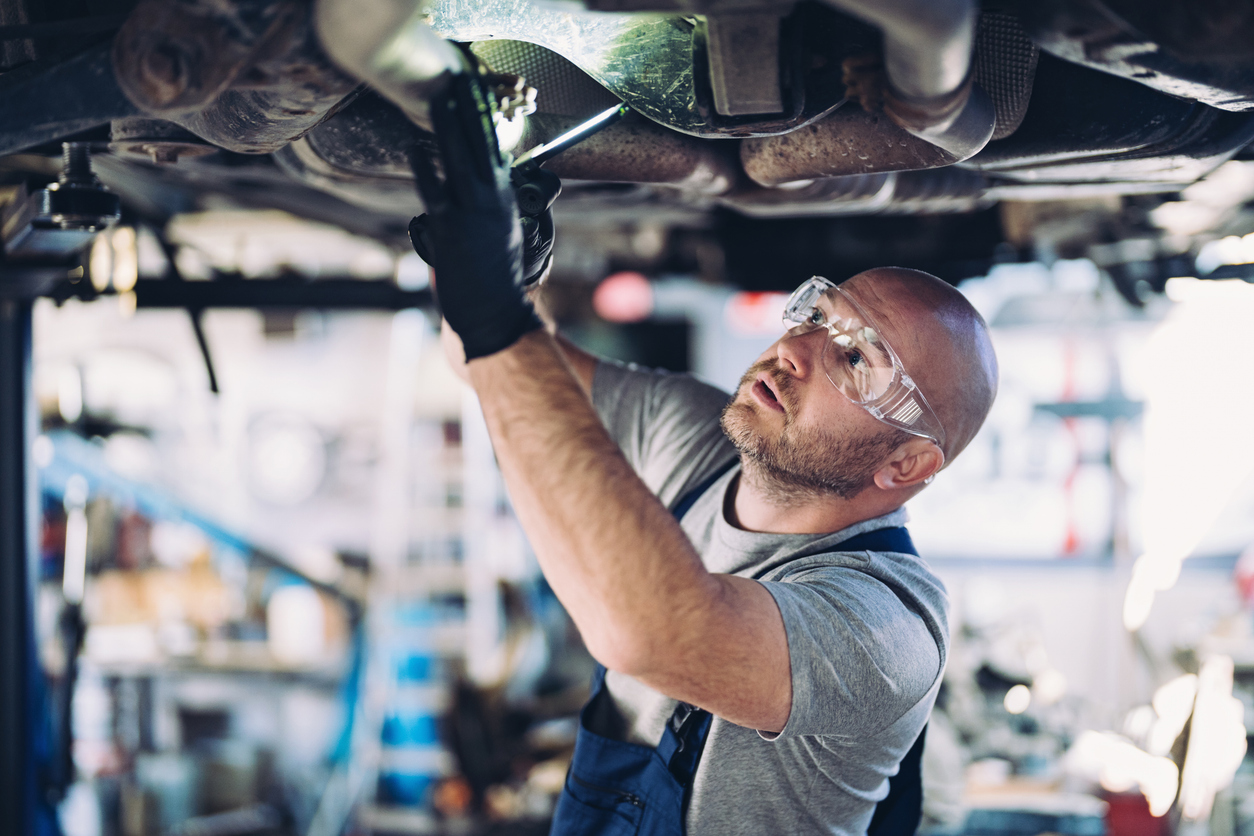
Every day, repair shops, dealerships, body shops, towing operations, mobile mechanics, and other garage businesses take responsibility for customer vehicles. U.S. service bays process nearly 500 million repair orders each year, creating countless situations in which customer vehicles are in a business’s hands. As brokers placing a garage insurance program, helping clients select the appropriate garagekeepers coverage is an important part of protecting their businesses and managing customer expectations.
One of the most common questions brokers receive is straightforward: “What happens if a customer’s vehicle is damaged while it’s in my care?” The answer depends on more than whether the business carries garagekeepers coverage. It also depends on which garagekeepers coverage form the business has selected. Each option protects customer vehicles, but each handles covered claims differently.
What Is Garagekeepers Coverage?
Garagekeepers coverage protects customer vehicles while they’re in the insured’s care, custody, or control. Repair shops, dealerships, body shops, towing operations, parking facilities, mobile mechanics working at customer locations, and similar businesses commonly purchase this coverage.
Because garagekeepers coverage follows care, custody, or control — not a physical garage location — mobile mechanics performing repairs at a customer’s home, business, or roadside may also need this coverage.
Garagekeepers vs. Garage Liability vs. Dealers Physical Damage Coverage
Garagekeepers coverage serves a different purpose than garage liability insurance. Whereas garagekeepers coverage is designed to respond to damage to a customer’s vehicle while it is in the insured’s care, custody, or control, garage liability covers third-party bodily injury or property damage arising from garage operations. Covered events may include, for example, a customer slipping in the lobby or an employee causing an accident during a test drive. It does not cover damage to a customer’s own vehicle while it is in the business’s care.
An easy way to remember the difference: Garage liability covers what the business does to others. Garagekeepers covers the vehicles customers hand over to the business.
For dealerships, it’s also important to distinguish garagekeepers coverage, garage liability coverage, and dealers physical damage coverage. Garagekeepers coverage protects customers’ vehicles while they’re in the dealer’s care, custody, or control. Dealers physical damage coverage protects the dealer’s own inventory vehicles. Garage liability coverage protects against third-party bodily injury and property damage arising from the dealership’s operations. Many dealerships need all three because each addresses a different exposure.
3 Garagekeepers Coverage Forms
Every garagekeepers coverage basis protects customer vehicles while they’re in the insured’s care. The question isn’t whether the vehicle is covered; it’s how the claim is handled after a covered loss — which depends on the policy language, the selected coverage basis, and the circumstances of the loss.
Garagekeepers coverage is generally written on one of three coverage bases: legal liability, direct excess, or direct primary. The right option depends on the client’s operations, customer expectations, contractual requirements, and carrier availability. Not every coverage basis is available for every class of business, so producers should confirm available options before making recommendations.
Garagekeepers Legal Liability
Garagekeepers legal liability responds when the insured is legally responsible for damage to a customer’s vehicle.
How to explain it to clients: “This option protects your business when you’re legally responsible for damage to a customer’s vehicle.”
Direct Primary
Direct primary generally responds first for covered damage to customer vehicles while they’re in the insured’s care, regardless of fault.
Coverage under direct primary generally does not depend on proving the insured’s legal liability for a covered loss, although policy conditions and claim requirements still apply. Availability varies by class of business and carrier.
How to explain it to clients: “If a covered loss occurs while the vehicle is in your care, your garagekeepers policy generally responds first.”
Direct Excess
Direct excess generally responds after the customer’s personal auto insurance has responded to a covered loss.
Coverage under direct excess typically is not dependent on proving the insured’s legal liability for a covered loss, although policy conditions and claim requirements still apply. Availability varies by class of business and carrier.
How to explain it to clients: “Your customer’s insurance generally responds first. Your garagekeepers coverage may provide additional covered protection afterward.”
How the Same Claim Is Handled Under Each Coverage Basis
To see how the three coverage bases differ, consider the following example: A customer leaves their vehicle overnight for repairs. A hailstorm damages the vehicle, resulting in $8,000 in covered damage. The vehicle was parked outside because the service bays were full, and the customer’s personal auto policy has a $500 deductible.
The same loss can produce three very different claims experiences depending on the selected coverage basis. Understanding these differences helps producers set customer expectations, satisfy contractual requirements, and recommend the option that best aligns with a client’s operations and coverage needs. Because availability varies by class of business and carrier, producers should confirm which coverage basis applies before a claim occurs.
Garagekeepers Legal Liability
Because simply leaving a vehicle outside generally does not constitute negligence, the repair shop likely would not be legally responsible for the damage. As a result, the garagekeepers legal liability coverage generally would not respond. The customer would typically file a claim under their own auto policy and be responsible for the applicable deductible.
Direct Excess
With direct excess, the customer’s personal auto policy typically responds first. Depending on the policy terms and conditions, the garagekeepers policy may then respond for covered amounts that remain after the customer’s policy has paid.
Direct Primary
With direct primary, the garagekeepers policy generally responds first for the covered loss, allowing the customer’s personal auto policy to generally remain out of the claims process.
Comparing the 3 Coverage Forms
Although the examples above involve the same types of losses, the claims process differs depending on the selected coverage form.
| Coverage Form | Who Generally Responds First? | Does Legal Responsibility Matter? |
| Legal Liability | Garagekeepers policy, if the insured is legally responsible | Yes |
| Direct Primary | Garagekeepers policy | Generally no, although policy conditions still apply |
| Direct Excess | Customer’s personal auto policy | Generally no, although policy conditions still apply |
How Producers Can Help Clients Choose the Right Coverage Basis
Choosing the right coverage basis involves more than comparing premiums. Two repair shops with nearly identical operations may choose different garagekeepers coverage bases depending on how they want customer vehicle claims handled — and on what their contracts require. The decision really comes down to two separate questions that are easy to blur together:
- Should coverage apply even when the shop wasn’t at fault? (This separates legal liability from the two direct options.)
- Should the shop’s policy pay before the customer’s own policy? (This separates direct excess from direct primary.)
A shop can want the first without the second. Understanding which outcome your client actually wants helps ensure they receive the coverage basis that best fits their operations and expectations. When discussing coverage with repair shop owners and other garage operators, consider questions such as:
- After a covered loss to a customer’s vehicle, do you want your policy to respond even if no one at your shop was at fault?
- Are you comfortable with your customer filing under their own auto policy first, or would you prefer your policy to respond first when available?
- How important is it that customers avoid paying their own deductible or filing a claim under their personal auto policy?
- Do any fleet service, dealer service, rental, municipal, or valet contracts require a particular garagekeepers coverage basis or minimum limit?
- Is premium the primary consideration, or is the overall claims experience equally important?
One common mistake is assuming the three coverage forms respond the same way because they all fall under garagekeepers coverage. Walking through a few real-world claim scenarios helps demonstrate why the selected coverage form matters before a loss occurs.
Helping Clients Protect Vehicles in Their Care
Selecting the appropriate garagekeepers coverage form starts with a conversation before a loss occurs about how claims will be handled.
Need help placing complex garage risks? Contact Cochrane & Company to learn how our experienced underwriting team can help you find solutions for auto service businesses, repair shops, dealerships, mobile mechanics, and other garage operations.
About Cochrane & Company
For more than six decades, Cochrane & Company has been proudly at the forefront of the insurance industry. Our experience has enabled us to innovate in powerful ways, reimagining the E&S market, and providing technology solutions that make it easy to do business with us. Licensed in all 50 states, we proudly serve clients across the nation, providing personalized and powerful solutions to help you become an even better partner for your clients. Speak to one of our experienced professionals today by calling (855) 967-0069.