
Logging and timber clients make daily operational decisions that create liability exposures well beyond the assumptions built into standard commercial policies. Many of the same factors that contribute to logging accidents, such as a cut that shifts a few degrees, equipment positioned near a boundary line, or a spark during dry weather, also create property damage exposures that a traditional policy was never designed to absorb. These exposures emerge in the normal flow of timber work, and loggers broad form coverage exists as an excess and surplus insurance solution built to address them.
This sector also works without consistent access to informed coverage guidance. The exposures are specific, the coverage needs are clear, and clients see the value when someone connects coverage to real operational risks. Brokers who understand how loggers broad form coverage functions and have access to the right markets naturally step into a consultative role that relatively few competitors occupy.
How Loggers Broad Form Coverage Works
Loggers broad form coverage steps in where standard commercial general liability (CGL) policies leave off. A CGL assumes predictable job sites, controlled operations, and work that does not involve altering or damaging property while the job is underway. It excludes property being worked on; property in the insured’s care, custody, or control; and, often, losses on land the insured does not own. Logging breaks every one of those assumptions.
A simple hypothetical shows how quickly gaps appear. A contractor misjudges a line by a few yards, and a tree falls onto the neighboring parcel, damaging a fence and a stand of young timber. Boundary errors are one of the most common sources of logging property damage liability. Under a standard CGL, this loss often sits outside coverage because it involves active operations on non-owned land. Under a loggers broad form policy, it is exactly the type of incident the coverage is built to address.
Similar exposures arise across the workday. Crews operate near utilities, public roads, and adjacent landowners where minor shifts in conditions can cause outsized damage. Dry weather can turn a spark into fire suppression bills. Loading or unloading equipment can harm nearby property. These are routine realities in timber work. Loggers broad form coverage protects clients from liabilities that a standard CGL was never designed to absorb and mirrors what actually happens on the tract.
Loggers broad form coverage does not extend to employee injuries or workers’ compensation exposures. Those risks require separate coverage.
What Does Loggers Broad Form Insurance Cover?
Loggers broad form coverage brings the core operational risks of timber work into scope so brokers can protect clients where their exposures actually develop.
Fire Suppression & Wildfire Liability
A spark ignites brush, and the state sends a crew to contain it. Fire suppression costs escalate quickly. The broad form responds to these expenses and any related property damage.
Damage to Property Being Cut or Harvested
A crew intends to thin select trees but misjudges the cut and damages high-value timber the landowner planned to retain. Because the loss occurs during active operations, a standard CGL often excludes it. The broad form covers it.
Accidental Trespass With Buy-Back Coverage
Boundary lines shift in forested terrain. A contractor crosses onto a neighboring parcel and cuts several trees before realizing the mistake. Trespass losses can be significant. The broad form allows brokers to add coverage for this scenario.
Equipment-Related Liability During Loading or Unloading
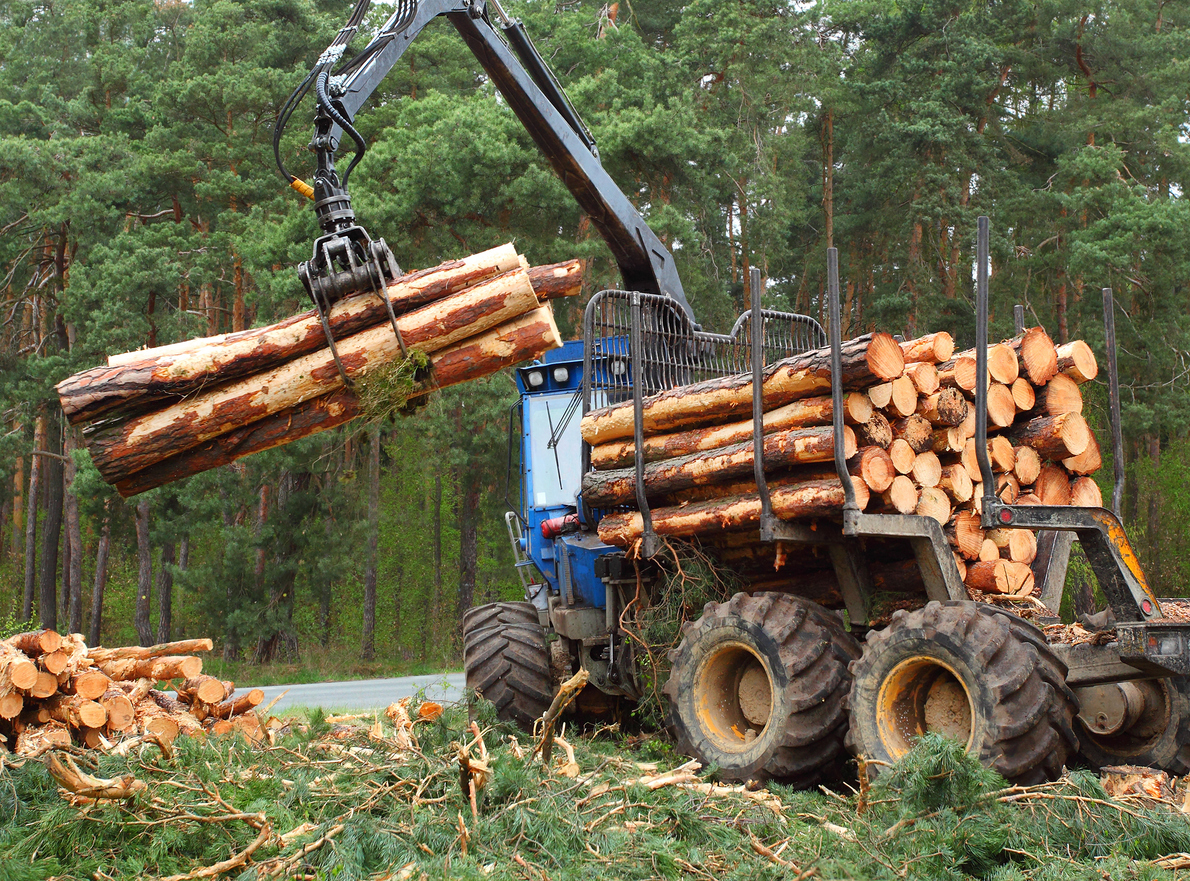
A loader swings a bundle of logs and damages a vehicle or access road. These losses occur in motion during routine transitions from tract to transport. The broad form responds.
Environmental Exposures Tied to Fuel, Lubricants, Pesticides, or Herbicides
Fuel spills, chemical drift, and similar incidents can create cleanup obligations or third-party property damage. The broad form can address these exposures when tied to normal operations.
Coverage for Additional Insured Landowners
Most logging work takes place on land the contractor does not own. Landowners expect protection when operations occur on their property. The broad form makes it possible to add them as additional insureds, which contracts often require.
Questions To Ask When Evaluating Coverage Needs
A strong placement starts with understanding how the operation works. These questions help you uncover exposures that determine whether loggers broad form coverage is necessary.
- Is the insurer experienced in logging claims?
- Do you transport fuel or lubricants to the site?
- Do you use pesticides or herbicides?
- Do you have tools, equipment, or cargo that require specific coverage?
- Does your work involve loading or unloading near other property?
- Does your current coverage include fire suppression costs?
- Do you operate on land you do not own?
- Do you need to add landowners as additional insureds?
Does Your Client Need Loggers Broad Form Coverage?
Many logging contractors assume their general liability policy protects them from accidental property damage during operations. You know how often that assumption leads to uncovered losses. When a client works on land they do not own, handles someone else’s timber, or operates equipment near improvements or utilities, the broad form becomes essential.
The need becomes clearer when a client moves across multiple parcels or works in conditions that change throughout the day. Boundary lines, terrain, and proximity to roads or structures create exposures that a standard policy was not built to address. The broad form responds to these operational realities and gives you a way to protect clients where their risk actually lives.
A simple guide is this: If a client could unintentionally damage property they do not own while the job is underway, loggers broad form coverage belongs in the conversation. It keeps routine moments from becoming uninsured events and gives you a policy that reflects the work your clients perform every day.
When you identify a need for loggers broad form coverage, the right partner changes everything. Cochrane & Company brings the underwriting insight, market access, and technical understanding that turn complex timber risks into clean, successful placements. We work this class every day, know what carriers expect, and move quickly when a broker needs support. Connect with an experienced underwriter at Cochrane & Company, and strengthen your position heading into 2026.
FAQ About Loggers Broad Form Insurance
What is loggers broad form insurance?
A specialized excess and surplus solution designed to cover the property damage exposures that develop during active timber operations.
What does loggers broad form cover?
Damage to standing timber, structures, roads, and other property during operations, as well as exposures tied to fire suppression, accidental trespass, loading and unloading, and certain environmental risks.
How does loggers broad form differ from general liability coverage?
A standard CGL excludes many of the core exposures of timber work. The broad form is built to cover the operational risks that arise during cutting, harvesting, and moving equipment on non-owned land.
Do contractors need this if they already have property insurance?
Yes. Property insurance protects the contractor’s own assets. It does not cover damage caused to someone else’s property during logging operations.
About Cochrane & Company
For more than six decades, Cochrane & Company has been proudly at the forefront of the insurance industry. Our experience has enabled us to innovate in powerful ways, reimagining the E&S market, and providing technology solutions that make it easy to do business with us. Licensed in all 50 states, we proudly serve clients across the nation, providing personalized and powerful solutions to help you become an even better partner for your clients. Speak to one of our experienced professionals today by calling (855) 967-0069.