
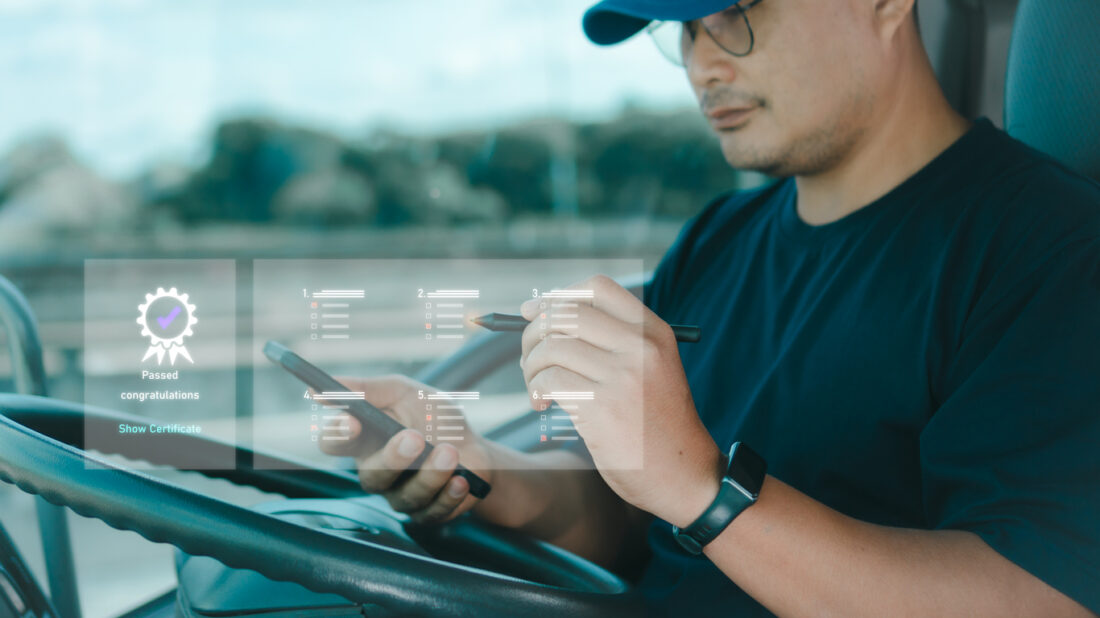
Telematics offers transportation risk underwriters a clearer sense of how fleets operate in practice by making visible the behavior and exposure patterns that influence real-world loss trends. Instead of relying solely on claims history, fleets can now present a more accurate, real-time picture of how they operate through current, verifiable data.
The momentum behind this shift is substantial, with the commercial telematics market projected to exceed $372 billion by 2032, up from over $70 billion in 2024. This trajectory affirms telematics as a lasting part of transportation risk evaluation.
What Is Telematics in Trucking?
Telematics delivers real-time behavioral insight that offers far more accuracy and precision than traditional rating factors. Rather than relying solely on loss history, underwriters can see how driving habits, routing choices, and equipment stewardship unfold in everyday operations.
Fleets that emphasize speed control, proactive maintenance, and consistent coaching can validate these practices even when recent loss runs mask their underlying discipline. This visibility supports more informed pricing, sharper claims analysis, and clearer alignment between safety efforts and underwriting outcomes.
For fleets that prioritize safety, telematics provides visibility into day-to-day operating discipline long before it shows in the loss runs. It shifts the narrative from what happened last year to how the fleet performs now. It also helps address a question many well-run fleets ask: “Why are our rates so high?” Telematics gives companies a way to demonstrate their day-to-day safety practices, validate their performance, and pursue more favorable pricing based on measurable behavior rather than historical losses alone.
The Connection Between Telematics & Risk in Transportation
Telematics creates a direct link between real driving behavior and expected loss outcomes. Because over 90% of motor vehicle accidents stem from some form of negligence, data that captures real-time behavior becomes one of the most accurate predictors of future performance.
The indicators most relevant to risk in a transportation business include:
- Patterns of distraction or fatigue
- Hard-braking and harsh-acceleration events
- Excessive speed variation
- Idling that signals route inefficiency
- Unplanned detours or hazard-prone corridors
- Cargo exposure patterns based on where and when trucks travel
Each of these factors ties directly to loss frequency and severity. Fleets that manage these behaviors well tend to see fewer claims. Telematics simply allows underwriters to show why.
The Evolution of Transportation Insurance Programs
As telematics continues to mature, transportation insurance programs evolve alongside it, forming clearer connections between real-time operational data and the loss trends that data helps explain. Modern systems adapt to the needs of different fleet types, including:
- Long-haul carriers navigating highway exposures
- Regional fleets operating across mixed environments
- Short-haul operators managing urban density, frequent stops, and variable traffic patterns
The technology alone cannot reduce losses; however, the awareness that telematics creates often accomplishes exactly that. Fleets gain the ability to identify trends early, coach drivers, and take steps that lower the likelihood or severity of accidents. Underwriters draw on these insights to evaluate improvements over time and to understand the operational discipline reflected in the data.
Telematics delivers particular value to fleets with strong safety cultures. Their decisions, habits, and standards finally gain visibility within the underwriting process rather than remaining implied through historical losses.
Preparing Brokers for Data-Driven Underwriting
Telematics gives brokers new leverage in the submission process, opening the door to clearer narratives and stronger placement strategies. Rather than relying on loss history alone, brokers can draw from real operational insight to:
- Explain positive safety trends and coaching improvements
- Clarify outlier losses that do not reflect a fleet’s overall behavior
- Strengthen submissions with quantifiable operational data
- Address underwriter questions with confidence and specificity
- Help insureds understand how stronger driving habits support better long-term pricing
Managing general agents (MGAs) with strong technical insight amplify these advantages. When an MGA interprets telematics data effectively and understands carrier expectations, the information functions as a strategic advantage rather than a point of friction. Access to carrier programs built for smooth telematics adoption, along with educational tools that guide clients through functionality and setup, supports a more efficient placement process and a better customer experience.
At Cochrane and Company, we help brokers navigate this shift by pairing industry insight with the underwriting expertise needed to evaluate data, understand carrier appetites, and guide clients through modern risk-management expectations. As 2026 approaches, fleets that adopt telematics effectively, along with brokers who clearly communicate its value, can pursue stronger placements and more competitive program structures.
Connect with an experienced underwriter at Cochrane and Company to strengthen your position heading into 2026.
About Cochrane & Company
For more than six decades, Cochrane & Company has been proudly at the forefront of the insurance industry. Our experience has enabled us to innovate in powerful ways, reimagining the E&S market, and providing technology solutions that make it easy to do business with us. Licensed in all 50 states, we proudly serve clients across the nation, providing personalized and powerful solutions to help you become an even better partner for your clients. Speak to one of our experienced professionals today by calling (855) 967-0069.